Portugal Visa Requirements 2026: New Entry Rules & ETIAS Guide
Navigating the complex landscape of international travel has become increasingly technical. As of 2026, the European travel landscape has undergone its most significant transformation in decades. Whether you are planning a surf trip to Ericeira, a digital nomad stint in Lisbon, or a historical tour of Porto, understanding the portugal visa requirements 2026 entry rules is non-negotiable. This guide provides a definitive breakdown of everything you need to know to ensure a seamless entry into the Portuguese Republic.
The implementation of the European Travel Information and Authorisation System (ETIAS) and the Entry/Exit System (EES) has fundamentally changed how non-EU citizens cross the border. While Portugal remains one of the most welcoming countries in Europe, the administrative burden has shifted toward digital pre-clearance. For the most up-to-date safety and security protocols, we always recommend checking our travel safety blog before your departure.
Who Needs a Visa? Portugal Visa Requirements 2026 Entry Rules by Nationality
Your nationality is the primary factor determining your entry path. In 2026, travelers are categorized into three main groups: EU/EEA citizens, ETIAS-eligible travelers (formerly visa-free), and Schengen Visa applicants. It is critical to note that according to the UK Government foreign travel advice for Portugal, even those who do not need a traditional visa must now comply with digital registration rules.
1. EU, EEA, and Swiss Citizens
Citizens of the European Union, Iceland, Liechtenstein, Norway, and Switzerland enjoy freedom of movement. They do not require a visa or an ETIAS to enter Portugal. A valid national ID card or passport is sufficient for entry.
2. ETIAS-Eligible Nationalities (Visa-Free for 90 Days)
As of May 2026, citizens from countries that previously enjoyed visa-free access must now obtain an ETIAS (European Travel Information and Authorisation System). This is not a visa, but a mandatory electronic travel authorization. This includes citizens of:
- United States, Canada, Mexico
- United Kingdom, Australia, New Zealand
- Japan, South Korea, Singapore
- Brazil, Argentina, Chile
- Israel, United Arab Emirates
3. Schengen Visa Required Nationalities
Citizens of countries not covered by the ETIAS or EU freedom of movement must apply for a Short-stay Schengen Visa (C-type) at a Portuguese consulate or embassy. This includes (but is not limited to):
- India, China, Pakistan, Philippines
- Most African nations (Nigeria, South Africa, Egypt, Kenya)
- Turkey, Russia, Indonesia
- Several Middle Eastern nations (Saudi Arabia, Qatar, Jordan)

The Digital Shift: Applying for ETIAS in 2026
The ETIAS is often confused with an e-visa, but it is technically a security waiver. For most travelers, this is the most critical part of the portugal visa requirements 2026 entry rules. The application is entirely online and must be completed at least 96 hours before travel, though instant approval is common for 95% of applicants.
ETIAS Application Process and Fees
- Official Portal: Access the official EU ETIAS website or mobile app.
- Personal Data: Enter your full name, date of birth, place of birth, and parents' names.
- Passport Details: Your passport must be valid for at least 3 months beyond your intended stay.
- Security Questions: Answer questions regarding your criminal record, travel to conflict zones, and previous deportations.
- Fee Payment: The ETIAS fee is €7 for adults. It is free for those under 18 or over 70.
- Processing Time: Most applications are processed within minutes. However, if additional checks are required, it can take up to 30 days.
Schengen Visa (Embassy Visa) Process
If you require a full Schengen Visa, the process is more rigorous. You must book an appointment at the VFS Global center or the Portuguese Embassy in your home country. The Schengen Visa fee is €90 for adults and €45 for children aged 6-12. Processing time is usually 15 to 45 calendar days. We recommend applying at least two months before your trip to account for administrative delays.

Essential Documentation and Proof of Entry
Regardless of whether you hold an ETIAS or a Schengen Visa, Portuguese border guards (SEF/AIMA) have the right to request documentation upon arrival. Failure to produce these can lead to a refusal of entry. For more detailed checklists on specific regions like the Azores or Madeira, visit our travel guides.
Required Documents Checklist 2026
- Valid Passport: Must have been issued within the last 10 years and be valid for at least 3 months after your planned date of departure from the Schengen area.
- Proof of Financial Means: Portugal requires travelers to possess €75 for the first entry and €40 for each subsequent day of the stay. Bank statements from the last three months are the preferred proof.
- Accommodation Details: A confirmed hotel booking, Airbnb receipt, or an "Identificação de Alojamento" (invitation letter) if staying with a resident.
- Return or Onward Ticket: You must prove you intend to leave the Schengen zone within 90 days.
- Travel Insurance: Must cover at least €30,000 for emergency medical expenses and repatriation across the entire Schengen area. Check the World Health Organization for the latest health advisories that might impact insurance coverage.
Recent Changes: May 2026 Entry Rules Update
The month of May 2026 marked a pivotal shift in Portuguese border policy. Two major updates were finalized that every traveler must acknowledge:
1. Full Implementation of the Entry/Exit System (EES)
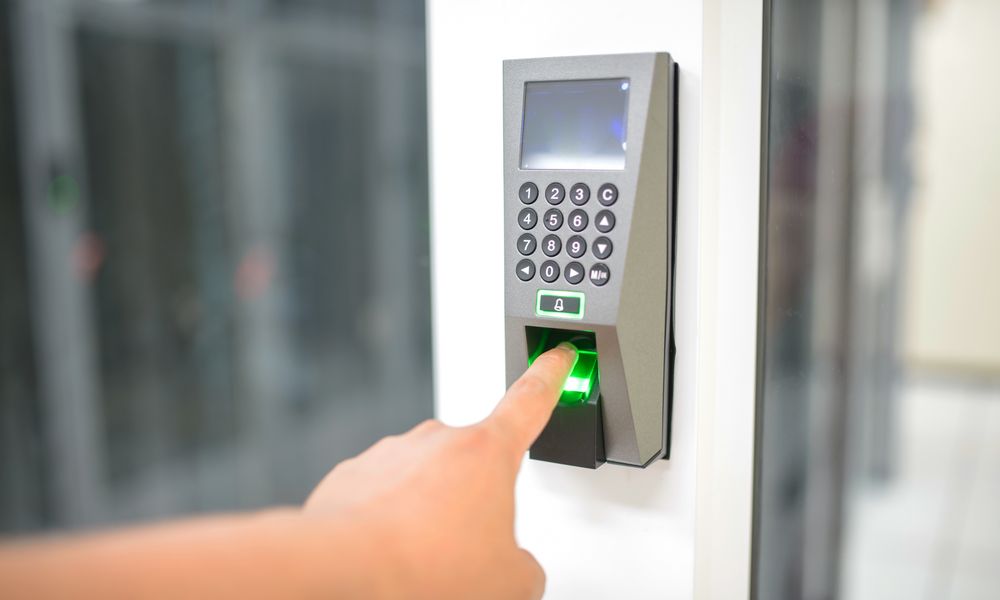
The EES has replaced manual passport stamping. Upon entry to Portugal, your biometric data (fingerprints and facial images) will be captured at the border. This system tracks exactly how many days you have spent in the Schengen zone. There is no longer any "gray area" regarding the 90/180-day rule; the system calculates it automatically and alerts border agents if you have stayed too long.
2. New Digital Nomad (D8) Financial Thresholds
Portugal has updated the income requirements for its popular Digital Nomad Visa (D8). As of May 2026, applicants must demonstrate a monthly income of at least four times the Portuguese minimum wage. With the 2026 minimum wage adjustments, this means remote workers must prove a monthly income exceeding €3,400 to qualify for the residency-based nomad visa.
3. Health and Environmental Declarations
While COVID-19 restrictions have largely vanished, Portugal has introduced a voluntary "Eco-Declaration" for travelers visiting protected regions like the Algarve's Ria Formosa or the Peneda-Gerês National Park. While not a visa requirement, some regional transport hubs may ask for proof of awareness of local environmental protection laws.
The 90/180 Rule and Overstay Penalties
One of the most misunderstood aspects of the portugal visa requirements 2026 entry rules is the 90/180-day limitation. Short-stay travelers (both ETIAS and Schengen Visa holders) can stay in the Schengen Area for a maximum of 90 days within any 180-day period.
Overstaying is a serious offense. In 2026, with the EES system fully operational, "stealth overstaying" is impossible. Penalties include:
- Fines: Ranging from €80 to €700 depending on the length of the overstay.
- Deportation: Immediate removal from the country at your own expense.
- Schengen Ban: Being blacklisted from entering any of the 29 Schengen countries for a period of 3 to 10 years.
- ETIAS Revocation: Your digital authorization will be cancelled, making future travel to Europe extremely difficult.
Transit Visa Requirements for Portugal
If you are simply passing through a Portuguese airport (like Lisbon Humberto Delgado or Porto Francisco Sá Carneiro) on your way to a non-Schengen destination, you may need an Airport Transit Visa (ATV).
Citizens of countries like Afghanistan, Bangladesh, DR Congo, Eritrea, Ethiopia, Ghana, Iran, Iraq, Nigeria, Pakistan, Somalia, and Sri Lanka must obtain a Category A Visa even if they do not leave the international transit area. If you intend to leave the airport to stay in a hotel overnight, you will need a full Schengen C-type Visa.
Rules for Changing Terminals
Note that in Lisbon, moving between Terminal 1 and Terminal 2 does not usually require passing through immigration, but checking in luggage for a secondary flight might. Always verify if your airline has a "through-check" agreement to avoid accidentally needing a visa to collect bags.
What to Do if Rules Change After Booking
Travel regulations are dynamic. Geopolitical shifts or health emergencies can trigger sudden changes to entry requirements. According to the U.S. Department of State Portugal Information, travelers are responsible for meeting the requirements effective on the day of travel, not the day of booking.
If the rules change:
- Contact your airline: They are the first line of enforcement and will have the latest "IATA Timatic" data.
- Check the SEF (AIMA) Portal: The official Portuguese migration office will post "Despachos" (decrees) regarding emergency changes.
- Update your ETIAS: If your passport number changes after booking but before travel, your ETIAS is void. You must apply for a new one.

Never Get Caught Off Guard: TripGuard360 and Gemini AI
The days of manually checking embassy websites every morning are over. At TripGuard360, we understand that the portugal visa requirements 2026 entry rules can change in an instant. That’s why we’ve developed a cutting-edge monitoring system designed to protect your travel plans.
Our platform utilizes Gemini AI to monitor official government gazettes, embassy circulars, and international travel databases 24/7. The moment a country like Portugal updates its entry requirements—whether it's a new vaccination mandate, a change in visa fees, or a shift in ETIAS protocols—our AI analyzes the impact and categorizes it by nationality.
With TripGuard360, you receive:
- Instant Telegram Alerts: A direct notification on your phone the second a rule change is detected.
- Detailed Email Briefs: A breakdown of exactly what changed and what actions you need to take (e.g., "New proof of funds required").
- 24/7 Monitoring: We track the news so you don't have to, ensuring you are never turned away at the boarding gate or the border.
Travel with confidence in 2026. By combining the exhaustive data in this guide with the real-time monitoring of TripGuard360, you are equipped to handle any hurdle the modern travel world throws your way. Portugal is waiting—ensure your paperwork is as ready as you are.